This page is still under construction.
In the meantime, you can still peruse what is currently available while additional content is populated here.
In the meantime, you can still peruse what is currently available while additional content is populated here.
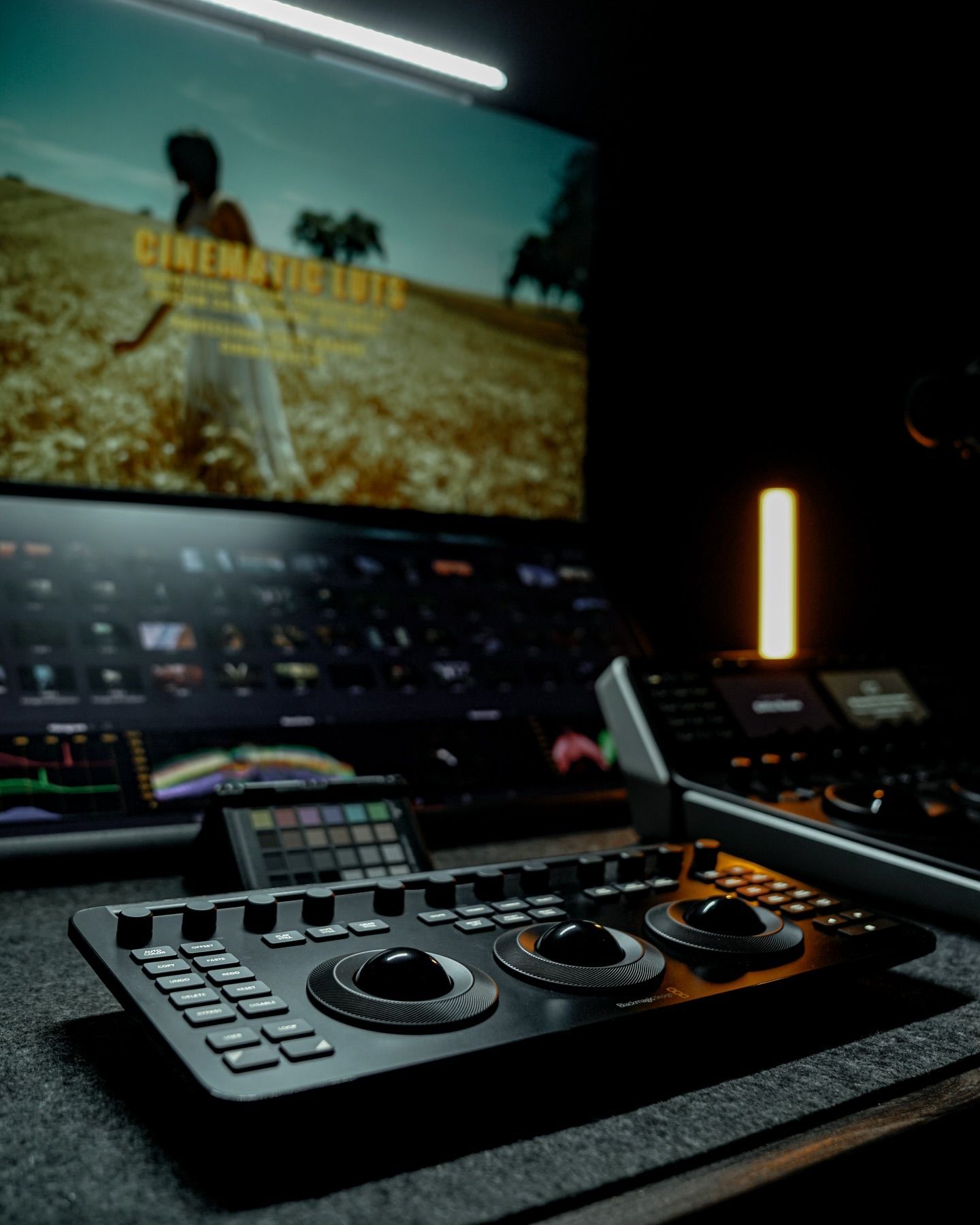 Video manipulation is a type of media manipulation that targets digital video using video processing and video editing techniques, as a straightforward extension of the long-standing possibilities of photo manipulation. Though video manipulation could be thought of as piecing together different video clips, the types of video manipulation can extend into several different purposes, such as providing the public with movie-quality artistic derivatives.
Film editing is the creative and technical part of the post-production process of filmmaking in which shots are combined into sequences that create a finished motion picture. The term is derived from the traditional process of working with film stock, but now primarily uses digital technology. The film editor works with raw footage to select, process, and structure the recorded images and sound material to give film its final form. Film editing is often referred to as the "invisible art" because when it is well-practiced, the viewer can become so engaged that he or she is not aware of the editor's work.
On its most fundamental level, film editing is the art, technique and practice of assembling shots into a coherent sequence. The job of an editor is not simply to mechanically put pieces of a film together, cut off film slates or edit dialogue scenes. A film editor must creatively work with the layers of images, story, dialogue, music, pacing, and the actors' performances to imagine and the film into a cohesive whole.
The first dimension is the graphic relations between sequential shots. The director makes deliberate choices regarding the composition, lighting, color, and movement within each shot, as well as the transitions between them. Techniques used by editors to establish graphic relations between shots include maintaining overall brightness consistency, keeping important elements in the center of the frame, playing with color differences, and creating visual matches or continuities between shots.
The second dimension is the rhythmic relationship between sequential shots. The duration of each shot, determined by the number of frames or length of film, contributes to the overall rhythm of the film. The filmmaker has control over the editing rhythm by adjusting the length of shots in relation to each other. Shot duration can be used to create specific effects and emphasize moments in the film. For example, a brief flash of white frames can convey a sudden impact or a violent moment. On the other hand, lengthening or adding seconds to a shot can allow for audience reaction or to accentuate an action. The length of shots can also be used to establish a rhythmic pattern, such as creating a steady beat or gradually slowing down or accelerating the tempo.
The third dimension is the spatial relationship between shots. Editing allows the filmmaker to construct film space and imply a relationship between different points in space. The filmmaker can juxtapose shots to establish spatial holes or construct a whole space out of component parts. For example, the filmmaker can start with a shot that establishes a spatial hole and then follow it with a shot of a part of that space, creating an analytical breakdown.
The final dimension is the temporal relation between shots. Editing plays a crucial role in manipulating the time of action in a film. It allows filmmakers to control the order, duration, and frequency of events, thus shaping the narrative and influencing the audience's perception of time. Editing gives filmmakers the power to control and manipulate the temporal aspects of storytelling in film.